How Much Unit Of Electricity Consumed By Refrigerator Per Day

Introduction
A refrigerator is one of the few home appliances that operates 24 hours a day, making it a significant contributor to your monthly electricity bill. Whether you are planning to purchase a new refrigerator or want to reduce your household energy costs, understanding how much unit of electricity consumed by refrigerator per day can help you make smarter decisions.
The actual electricity usage of a refrigerator depends on several factors, including its size, capacity, energy efficiency rating, compressor technology, temperature settings, and daily usage habits. Modern inverter refrigerators are generally more energy-efficient than conventional models because they adjust compressor speed based on cooling demand.
In this guide, you’ll learn how refrigerator electricity consumption is calculated, how many units different refrigerator sizes consume, what affects energy usage, and practical ways to reduce your electricity bill while keeping your food fresh.
Table of Contents
- What Is Refrigerator Electricity Consumption?
- How Does a Refrigerator Consume Electricity?
- How Many Watts Does a Refrigerator Use?
- How Much Unit Does a Refrigerator Consume Per Day?
- Daily, Monthly & Yearly Electricity Consumption
- Refrigerator Electricity Consumption by Size
- Inverter vs Non-Inverter Refrigerator Electricity Usage
- Factors That Affect Refrigerator Power Consumption
- How to Calculate Refrigerator Electricity Cost
- Tips to Reduce Refrigerator Electricity Consumption
- Frequently Asked Questions
- Final Thoughts
What Is Refrigerator Electricity Consumption?
Electricity consumption refers to the amount of electrical energy your refrigerator uses during operation. This energy is measured in kilowatt-hours (kWh), commonly known as units of electricity.
For example:
- 1 Unit = 1 kWh (Kilowatt-hour)
If your refrigerator uses 1 kWh of electricity in one day, it consumes 1 electricity unit.
Unlike appliances such as electric irons or microwaves that operate only for short periods, refrigerators run continuously throughout the day. However, they do not consume electricity at full power all the time because the compressor automatically starts and stops to maintain the desired temperature.
How Does a Refrigerator Consume Electricity?
Many people assume a refrigerator runs continuously at full power, but that isn’t how it works.
A refrigerator cools by using a compressor, which circulates refrigerant through the cooling system. Once the desired temperature is reached, the compressor switches off. When the internal temperature rises, it turns back on.
This automatic cycling means the refrigerator only consumes maximum power while the compressor is actively running.
Modern inverter refrigerators are even more efficient because instead of repeatedly turning on and off, the compressor adjusts its speed according to the cooling requirement. This reduces energy consumption and helps maintain a more consistent temperature.
Understanding Running Watts vs Starting Watts
Every refrigerator has two power ratings:
Running Watts
Running watts are the amount of electricity your refrigerator consumes during normal operation.
For most household refrigerators, running power ranges between:
- 100W to 250W
depending on the size and model.
Starting Watts
When the compressor starts, it temporarily requires extra power.
Starting watts are usually 2 to 3 times higher than running watts, but this surge lasts only a few seconds and has minimal impact on your overall electricity bill.
How Many Watts Does a Refrigerator Use?
The power consumption of a refrigerator depends on its size, cooling technology, and compressor type.
| Refrigerator Capacity | Average Running Watts |
|---|---|
| 100–150 Liters | 70–100 Watts |
| 180–220 Liters | 90–130 Watts |
| 250–300 Liters | 120–170 Watts |
| 350–450 Liters | 150–220 Watts |
| 500–700 Liters | 180–300 Watts |
These are average values. Actual power consumption may vary depending on the manufacturer and model.
How Much Unit of Electricity Does a Refrigerator Consume Per Day?
On average, a household refrigerator consumes between:
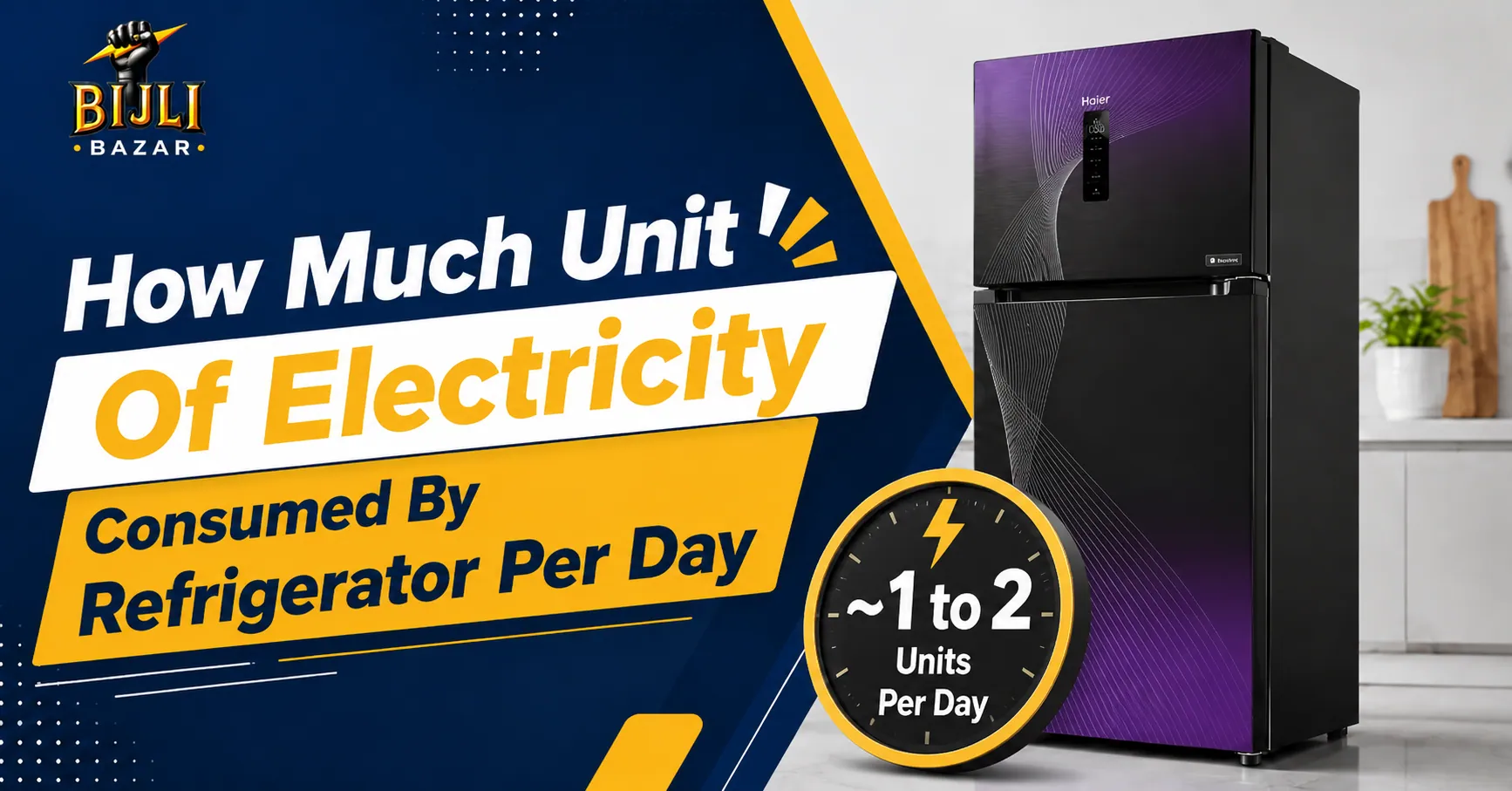
0.8 to 2.5 electricity units per day
depending on:
- Refrigerator size
- Energy efficiency rating
- Inverter or non-inverter technology
- Ambient room temperature
- Door opening frequency
- Cooling settings
- Food load
Smaller refrigerators naturally consume fewer units, while large side-by-side or multi-door models require more electricity.
Average Refrigerator Electricity Consumption
| Time Period | Estimated Consumption |
|---|---|
| Per Hour | 0.04–0.10 Units |
| Per Day | 0.8–2.5 Units |
| Per Month | 24–75 Units |
| Per Year | 290–900 Units |
These values represent average household usage and may vary depending on your refrigerator’s specifications and operating conditions.
Refrigerator Electricity Consumption by Capacity
The size of your refrigerator plays an important role in determining how much electricity it uses.
| Refrigerator Size | Average Daily Consumption |
|---|---|
| 100 Liters | 0.5–0.8 Units |
| 200 Liters | 0.8–1.2 Units |
| 300 Liters | 1.0–1.5 Units |
| 400 Liters | 1.2–2.0 Units |
| 500 Liters | 1.5–2.3 Units |
| 600 Liters | 2.0–2.8 Units |
Larger refrigerators require more cooling power because they have a greater storage capacity and internal volume.
How to Calculate Refrigerator Electricity Consumption
If you want to estimate your refrigerator’s electricity usage, use this simple formula:
Electricity Consumption Formula
Units (kWh) = Power (Watts) × Running Hours ÷ 1000
Example
Suppose your refrigerator uses:
- Power = 150 Watts
- Compressor Running Time = 8 Hours Per Day
Calculation:
150 × 8 ÷ 1000 = 1.2 Units Per Day
If electricity costs PKR 65 per unit, your estimated daily cost would be:
1.2 × 65 = PKR 78 per day
Monthly cost:
PKR 78 × 30 = PKR 2,340
This estimate may vary depending on your electricity tariff and actual refrigerator usage.
Why Refrigerators Don’t Run 24 Hours at Full Power
Although your refrigerator remains switched on throughout the day, the compressor only operates when cooling is needed.
Once the desired temperature is reached:
- The compressor stops.
- Electricity usage drops significantly.
- The compressor restarts only when the internal temperature rises.
This automatic cycle helps reduce overall electricity consumption while keeping food fresh.
Refrigerator Electricity Consumption by Type
Different types of refrigerators consume different amounts of electricity depending on their design, cooling technology, and compressor efficiency.
| Refrigerator Type | Average Daily Consumption |
|---|---|
| Single Door Refrigerator | 0.6–1.0 Units |
| Double Door Refrigerator | 1.0–1.5 Units |
| Top Freezer Refrigerator | 0.8–1.3 Units |
| Bottom Freezer Refrigerator | 1.0–1.6 Units |
| Side-by-Side Refrigerator | 1.8–2.8 Units |
| French Door Refrigerator | 2.0–3.0 Units |
| Mini Refrigerator | 0.3–0.7 Units |
| Inverter Refrigerator | 0.6–1.5 Units |
| Non-Inverter Refrigerator | 1.2–2.5 Units |
Tip: Modern inverter refrigerators generally consume 20% to 40% less electricity than conventional models.
Inverter vs Non-Inverter Refrigerator Electricity Consumption
One of the biggest factors affecting electricity usage is compressor technology.
Inverter Refrigerator
An inverter refrigerator uses a variable-speed compressor that automatically adjusts its speed based on the cooling demand instead of constantly switching on and off.
Advantages
- Lower electricity consumption
- Quieter operation
- More consistent cooling
- Longer compressor lifespan
- Better temperature control
Average consumption:
0.6 to 1.5 units per day
Non-Inverter Refrigerator
A conventional refrigerator uses a fixed-speed compressor that repeatedly turns on and off.
Every time it starts, it draws more electricity.
Average consumption:
1.2 to 2.5 units per day
Factors Affecting Refrigerator Electricity Consumption
Even two refrigerators with the same capacity can consume different amounts of electricity due to several factors.
1. Refrigerator Size
Larger refrigerators require more energy to cool a larger storage area.
For example:
- 180L refrigerator uses much less electricity than a 550L side-by-side refrigerator.
2. Energy Efficiency Rating
Always look for high energy-efficiency ratings when purchasing a refrigerator.
Energy-efficient models:
- Consume fewer units
- Reduce monthly electricity bills
- Help protect the environment
3. Compressor Technology
Modern inverter compressors adjust cooling automatically.
Traditional compressors consume more electricity because they repeatedly start and stop.
4. Temperature Settings
Setting the refrigerator colder than necessary forces the compressor to run longer.
Recommended settings:
- Refrigerator: 3°C to 5°C
- Freezer: -18°C
5. Frequency of Door Opening
Every time the refrigerator door opens:
- Cold air escapes
- Warm air enters
- Compressor runs longer
Frequent door openings can noticeably increase electricity usage.
6. Ambient Room Temperature
During Pakistan’s summer season, refrigerators consume more electricity because they must remove additional heat.
Hot kitchens also increase compressor operating time.
7. Food Load
An empty refrigerator loses cooling quickly.
A moderately filled refrigerator retains cold air better and usually operates more efficiently.
Avoid overloading, as it restricts airflow.
8. Door Seal Condition
Damaged rubber gaskets allow cold air to escape.
As a result:
- Compressor runs continuously
- Electricity consumption increases
Inspect door seals regularly.
9. Refrigerator Location
Avoid placing your refrigerator:
- Near ovens
- In direct sunlight
- Close to stoves
- Next to dishwashers
These heat sources make the compressor work harder.
Estimated Annual Refrigerator Electricity Consumption
| Refrigerator Capacity | Estimated Annual Consumption |
|---|---|
| 150 Liters | 250–320 kWh |
| 200 Liters | 300–420 kWh |
| 300 Liters | 450–600 kWh |
| 400 Liters | 550–750 kWh |
| 500 Liters | 700–900 kWh |
Actual usage depends on household conditions and daily habits.
Refrigerator Electricity Cost in Pakistan
The monthly running cost depends on your electricity tariff.
Example Calculation
Suppose your refrigerator consumes:
- 1.2 Units Per Day
Monthly units:
1.2 × 30 = 36 Units
If electricity costs:
PKR 65 per unit
Monthly refrigerator cost:
36 × 65 = PKR 2,340
Annual cost:
PKR 2,340 × 12 = PKR 28,080
This is only an example. Your actual cost depends on your electricity provider and usage.
How to Reduce Refrigerator Electricity Consumption
Reducing electricity usage doesn’t mean reducing cooling performance.
These simple practices can help lower your monthly bill.
Keep the Refrigerator Full (But Not Overloaded)
A moderately stocked refrigerator retains cold air better than an empty one.
Set the Correct Temperature
Recommended settings:
- Refrigerator: 3°C–5°C
- Freezer: -18°C
Avoid setting temperatures lower than necessary.
Minimize Door Openings
Open the refrigerator only when necessary and close the door promptly.
Clean Condenser Coils
Dust on condenser coils reduces cooling efficiency.
Cleaning them every six months helps improve performance.
Check Door Gaskets
Replace damaged rubber seals to prevent cold air leakage.
Keep Hot Food Out
Allow cooked food to cool before placing it inside the refrigerator.
Hot food forces the compressor to work harder.
Leave Space Around the Refrigerator
Maintain at least 4–6 inches of clearance behind the refrigerator for proper ventilation.
Defrost When Necessary
If your refrigerator is not frost-free, remove excess ice buildup regularly.
Thick frost reduces cooling efficiency.
Avoid Direct Sunlight
Place the refrigerator in a cool, shaded area away from heat sources.
Choose an Inverter Refrigerator
Although the initial purchase price may be higher, inverter refrigerators often save a significant amount on electricity over time.
Energy-Saving Features in Modern Refrigerators
Many modern refrigerators include features designed to improve efficiency.
Examples include:
- Digital inverter compressors
- Eco Mode
- Vacation Mode
- Smart temperature sensors
- Multi-airflow cooling
- Frost-free technology
- Door alarm
- LED interior lighting
These features help optimize cooling while reducing power consumption.
Best Energy-Efficient Refrigerator Brands in Pakistan
If you’re planning to buy a refrigerator that consumes less electricity, choosing a trusted brand is just as important as selecting the right size. Many modern refrigerators are equipped with inverter compressors and energy-saving technologies that help lower electricity bills while delivering reliable cooling performance.
Some of the most popular refrigerator brands in Pakistan include:
- Haier Refrigerators
- Dawlance Refrigerators
- PEL Refrigerators
- Orient Refrigerators
- TCL Refrigerators
- EcoStar Refrigerators
- Samsung Refrigerators
- LG Refrigerators
- Panasonic Refrigerators
- Hitachi Refrigerators
- Midea Refrigerators
These brands offer a wide range of single-door, double-door, top freezer, bottom freezer, side-by-side, and inverter refrigerator models to suit different household needs.
How to Choose an Energy-Efficient Refrigerator
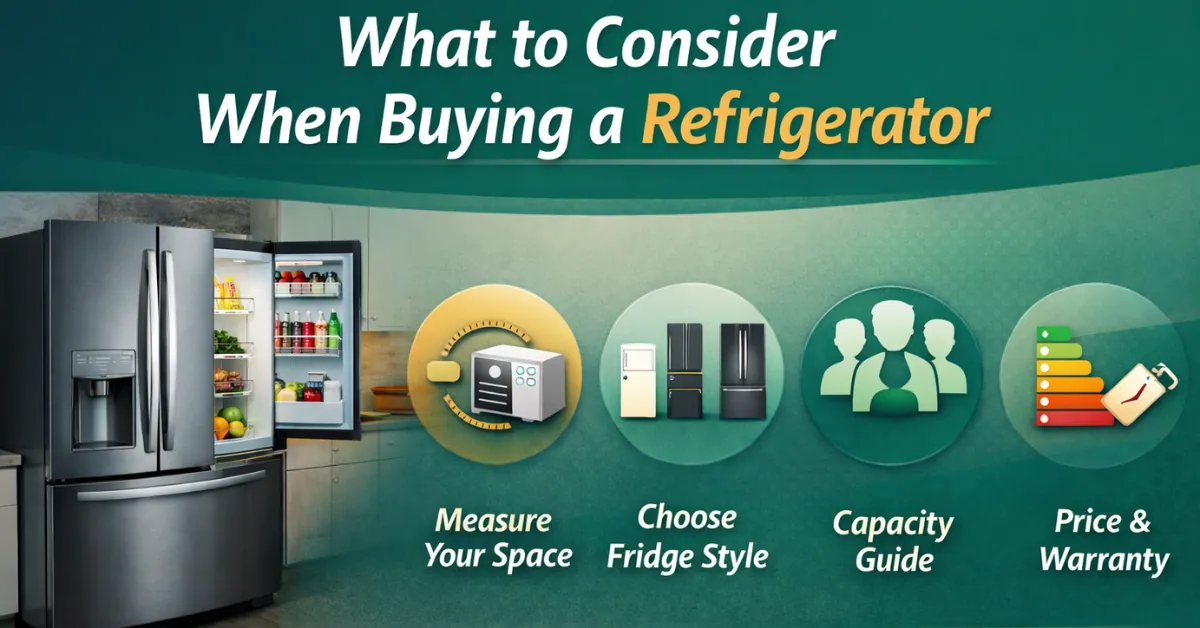
Buying the right refrigerator can save you thousands of rupees in electricity costs over its lifetime. Before making a purchase, consider the following factors:
Choose the Right Capacity
Select a refrigerator size based on your family size.
| Family Members | Recommended Capacity |
|---|---|
| 1–2 People | 150–220 Liters |
| 3–4 People | 220–350 Liters |
| 5–6 People | 350–500 Liters |
| Large Families | 500+ Liters |
Buying a refrigerator that is too large for your needs can result in unnecessary electricity consumption.
Prefer Inverter Technology
An inverter refrigerator adjusts compressor speed automatically, providing better cooling while consuming less electricity.
Although inverter models may cost more initially, they often reduce electricity bills over time.
Check Energy Efficiency
Always choose a refrigerator with high energy efficiency. Energy-saving models consume fewer units while maintaining excellent cooling performance.
Look for Useful Features
Modern refrigerators offer several convenient and energy-saving features, such as:
- Digital Inverter Compressor
- Turbo Cooling
- Frost-Free Cooling
- Multi Air Flow
- Smart Sensors
- Vacation Mode
- Eco Mode
- Door Alarm
- LED Lighting
- Convertible Freezer
Common Mistakes That Increase Refrigerator Electricity Bills
Many households unknowingly increase electricity consumption by making these common mistakes:
- Placing hot food directly inside the refrigerator
- Keeping the refrigerator door open for too long
- Setting the temperature lower than necessary
- Blocking air vents with food containers
- Ignoring dirty condenser coils
- Using damaged door seals
- Installing the refrigerator close to heat sources
- Overloading or underloading the refrigerator
- Skipping regular maintenance
Avoiding these mistakes can significantly improve energy efficiency.
Refrigerator Electricity Consumption Myths
Myth 1: Bigger Refrigerators Always Consume Too Much Electricity
Not necessarily. A modern inverter refrigerator with a larger capacity may consume less electricity than an older, smaller conventional refrigerator.
Myth 2: Turning the Refrigerator Off at Night Saves Electricity
Turning your refrigerator off regularly is not recommended. It can spoil food and force the compressor to work harder when restarted.
Myth 3: Colder Temperature Means Better Cooling
Setting the refrigerator to its coldest setting does not always improve food preservation. Instead, it increases electricity consumption.
Myth 4: Frost-Free Refrigerators Consume Too Much Electricity
Modern frost-free refrigerators are designed to provide efficient cooling while minimizing energy usage.
Is an Inverter Refrigerator Worth Buying?
If you use your refrigerator daily, an inverter model is one of the best long-term investments.
Benefits Include:
- Lower electricity bills
- Quieter operation
- Faster cooling
- Longer compressor life
- Stable temperature control
- Better food preservation
Although inverter refrigerators have a higher purchase price, they often recover the extra cost through energy savings over the years.
Frequently Asked Questions (FAQs)
1. How much unit of electricity consumed by refrigerator per day?
Most household refrigerators consume between 0.8 and 2.5 units of electricity per day, depending on capacity, compressor type, and usage habits.
2. How many watts does a refrigerator use?
A typical refrigerator consumes 70 to 300 watts during normal operation.
3. How many units does a refrigerator consume in a month?
On average, refrigerators consume between 24 and 75 units per month.
4. Does an inverter refrigerator consume less electricity?
Yes. Inverter refrigerators can reduce electricity consumption by approximately 20% to 40% compared to conventional refrigerators.
5. Which refrigerator uses the least electricity?
Small inverter refrigerators with high energy-efficiency ratings generally consume the least electricity.
6. Does opening the refrigerator door increase electricity consumption?
Yes. Every time the door is opened, warm air enters and the compressor works harder to restore the desired temperature.
7. What is the best refrigerator temperature for saving electricity?
The recommended settings are:
- Refrigerator: 3°C to 5°C
- Freezer: -18°C
These settings provide efficient cooling while minimizing electricity usage.
8. Does an empty refrigerator consume more electricity?
A completely empty refrigerator loses cold air more quickly. Keeping it moderately filled helps improve cooling efficiency.
9. Which consumes more electricity, a single-door or double-door refrigerator?
Generally, double-door refrigerators consume slightly more electricity because of their larger capacity.
10. How can I reduce my refrigerator electricity bill?
You can reduce electricity usage by:
- Choosing an inverter refrigerator
- Cleaning condenser coils
- Keeping the correct temperature
- Avoiding frequent door openings
- Replacing damaged door seals
- Keeping proper ventilation around the refrigerator
11. How long does a refrigerator compressor run each day?
Most refrigerator compressors run for approximately 8 to 10 hours per day, spread across multiple cooling cycles.
12. Is it safe to keep a refrigerator running 24 hours?
Yes. Refrigerators are designed to operate continuously while automatically cycling the compressor on and off.
Final Thoughts
Understanding how much unit of electricity consumed by refrigerator per day helps you manage household electricity expenses more effectively. While every refrigerator uses electricity continuously, the actual consumption depends on factors such as capacity, compressor technology, temperature settings, room conditions, and usage habits.
Choosing an energy-efficient inverter refrigerator, maintaining the appliance regularly, and following simple energy-saving practices can significantly reduce your monthly electricity bill without compromising cooling performance. Whether you’re replacing an old refrigerator or buying your first one, investing in a modern, energy-efficient model is a smart long-term decision.
At Bijli Bazar, you’ll find a wide range of refrigerators from leading brands, including Haier, Dawlance, PEL, Orient, TCL, EcoStar, Samsung, LG, Panasonic, Hitachi, and Midea. Compare features, capacities, and prices to choose a refrigerator that fits your budget and delivers reliable performance while keeping electricity costs under control.