



How To Clean A Refrigerator Properly

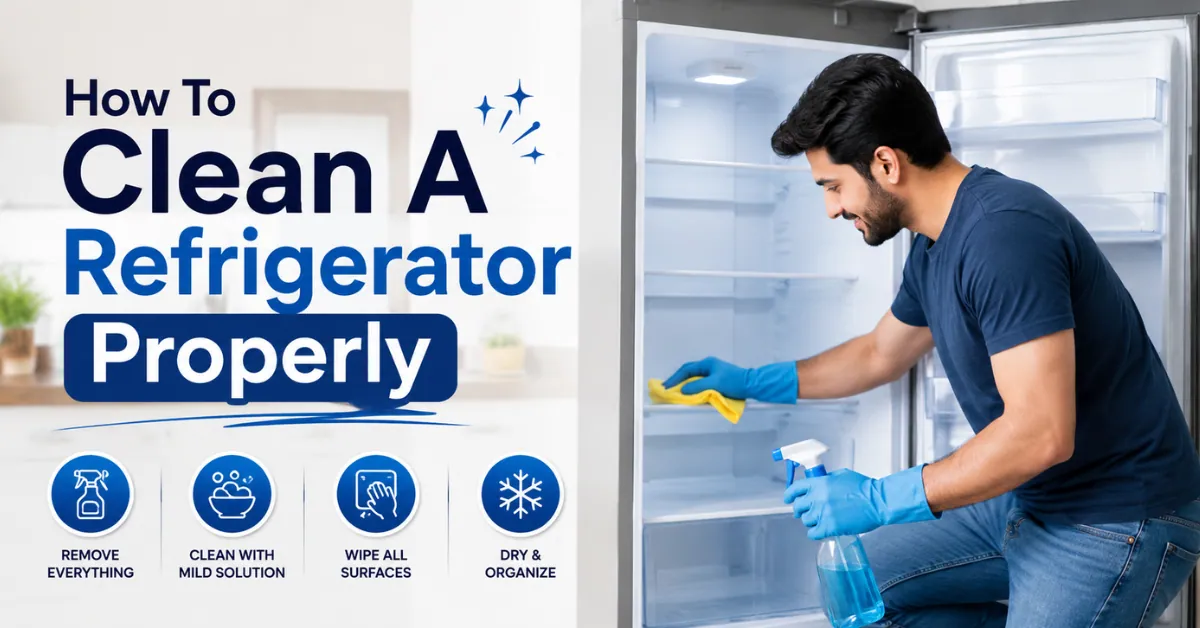
How to Clean a Refrigerator Properly: Complete Step-by-Step Guide (2026)
Introduction
A clean refrigerator is essential for keeping your food fresh, reducing unpleasant odors, and improving the appliance’s efficiency. Over time, food spills, expired items, and moisture can create bacteria, mold, and bad smells inside your refrigerator.
Knowing how to clean a refrigerator properly not only improves hygiene but also helps extend the lifespan of your appliance and maintain optimal cooling performance.
In this guide, you’ll learn the best way to clean your refrigerator, how often it should be cleaned, what cleaning solutions to use, and tips to keep it fresh all year round.
Why Is It Important to Clean Your Refrigerator?
Regular refrigerator cleaning offers several benefits.
Benefits of Cleaning Your Refrigerator
- Removes bacteria and germs
- Eliminates unpleasant odors
- Keeps food fresh longer
- Prevents mold growth
- Improves cooling efficiency
- Reduces energy consumption
- Extends refrigerator lifespan
- Creates a healthier kitchen environment
How Often Should You Clean a Refrigerator?
Experts recommend the following cleaning schedule:
Weekly
- Wipe food spills immediately
- Remove expired food
- Clean door handles
Monthly
- Clean shelves and drawers
- Wipe interior walls
- Organize food items
Every 3–6 Months
- Deep clean the refrigerator
- Clean door seals (gaskets)
- Vacuum condenser coils (if accessible)
- Clean the exterior thoroughly
Things You’ll Need
Before starting, gather these supplies:
Cleaning Materials
- Warm water
- Mild dish soap
- Baking soda
- White vinegar
- Soft microfiber cloth
- Sponge
- Soft toothbrush
- Spray bottle
- Dry towel
Avoid using harsh chemicals, bleach, or abrasive scrubbers that can damage the refrigerator’s surfaces.
Step-by-Step Guide to Clean a Refrigerator Properly
Step 1: Turn Off and Unplug the Refrigerator
For safety and energy savings:
- Turn off the refrigerator.
- Unplug it from the power outlet if possible.
If unplugging isn’t practical, keep the door open only as long as necessary.
Step 2: Empty the Refrigerator
Remove:
- Fruits
- Vegetables
- Drinks
- Dairy products
- Meat
- Sauces
- Leftovers
Check expiration dates and discard spoiled or expired food.
Place perishable items in a cooler if cleaning takes a long time.
Step 3: Remove Shelves and Drawers
Take out:
- Glass shelves
- Plastic drawers
- Door bins
- Egg trays
Allow cold glass shelves to reach room temperature before washing to reduce the risk of cracking.
Wash removable parts with warm water and mild dish soap, then let them dry completely.
Step 4: Clean the Interior
Prepare a simple cleaning solution:
- 2 cups warm water
- 2 tablespoons baking soda
or
- Equal parts white vinegar and water
Use a soft cloth to clean:
- Interior walls
- Ceiling
- Floor
- Corners
- Door compartments
For stubborn stains, let the solution sit for a few minutes before wiping.
Step 5: Clean Door Seals (Gaskets)
Door gaskets collect dirt and moisture.
Use:
- Warm soapy water
- Soft toothbrush
Gently scrub around the rubber seals.
Dry them thoroughly to help maintain a proper airtight seal.
Step 6: Clean the Exterior
Wipe:
- Refrigerator doors
- Side panels
- Top surface
- Handles
- Control panel
For stainless steel refrigerators:
- Use a microfiber cloth.
- Wipe in the direction of the steel grain.
- Avoid abrasive cleaners.
Step 7: Clean the Condenser Coils
Dust on condenser coils reduces cooling efficiency.
If your model allows access:
- Unplug the refrigerator.
- Use a soft brush or vacuum cleaner.
- Remove dust carefully.
Cleaning the coils every six months can improve efficiency and reduce electricity consumption.
Step 8: Dry Everything Completely
Before reassembling:
- Dry shelves
- Dry drawers
- Wipe interior surfaces
- Remove excess moisture
This helps prevent mold growth.
Step 9: Organize Food Properly
Arrange food by category.
Top Shelf
- Ready-to-eat foods
- Drinks
- Leftovers
Middle Shelf
- Dairy products
- Eggs
Bottom Shelf
- Raw meat (in sealed containers)
Crisper Drawer
- Fruits
- Vegetables
Proper organization improves airflow and cooling performance.
How to Remove Bad Smells from a Refrigerator
If unpleasant odors remain after cleaning, try these natural solutions:
Baking Soda
Place an open container of baking soda inside the refrigerator.
Activated Charcoal
Absorbs strong food odors naturally.
Lemon
Place sliced lemon inside for a fresh citrus scent.
Coffee Grounds
Dry coffee grounds can also help absorb odors.
Replace odor absorbers every month for best results.
Common Refrigerator Cleaning Mistakes
Avoid these mistakes:
- Using bleach inside the refrigerator
- Cleaning with abrasive scrubbers
- Forgetting door seals
- Overloading shelves after cleaning
- Leaving moisture inside
- Ignoring condenser coils
- Blocking air vents with food
Tips to Keep Your Refrigerator Clean Longer
Follow these simple habits:
- Wipe spills immediately.
- Store food in sealed containers.
- Label leftovers with dates.
- Throw away expired food weekly.
- Keep fruits and vegetables in drawers.
- Clean handles regularly.
- Replace baking soda every month.
Signs Your Refrigerator Needs Cleaning
You should clean your refrigerator if you notice:
- Bad odors
- Sticky shelves
- Mold growth
- Food spills
- Frost buildup
- Dirty door seals
- Poor cooling performance
Frequently Asked Questions (FAQs)
How do you clean a refrigerator properly?
Empty the refrigerator, remove shelves, clean all interior surfaces with warm soapy water or a baking soda solution, dry thoroughly, and reorganize food before turning it back on.
What is the best thing to clean the inside of a refrigerator?
A mixture of warm water and baking soda or white vinegar is safe and effective for removing stains, odors, and bacteria.
How often should a refrigerator be cleaned?
Light cleaning should be done weekly, while a deep clean is recommended every three to six months.
Can I use vinegar to clean my refrigerator?
Yes. White vinegar is a natural cleaner that helps remove stains, grease, and unpleasant odors.
How do I remove bad smells from my refrigerator?
Use baking soda, activated charcoal, coffee grounds, or lemon slices to absorb odors after cleaning.
Should I unplug my refrigerator before cleaning?
Yes, if possible. Unplugging the refrigerator is safer and can make cleaning easier.
Is bleach safe for cleaning a refrigerator?
No. Bleach can leave harmful residues and strong odors. Mild soap, baking soda, or vinegar are safer options.
Does cleaning condenser coils improve performance?
Yes. Removing dust from condenser coils helps improve cooling efficiency and may reduce energy consumption.
Final Thoughts
Learning how to clean a refrigerator properly is an important part of maintaining a hygienic and efficient kitchen. Regular cleaning removes bacteria, prevents unpleasant odors, improves cooling performance, and extends the life of your refrigerator.
By following this simple step-by-step guide and adopting regular maintenance habits, you can keep your refrigerator fresh, organized, and running efficiently throughout the year.