



What Is the Difference Between LCD and LED TV?

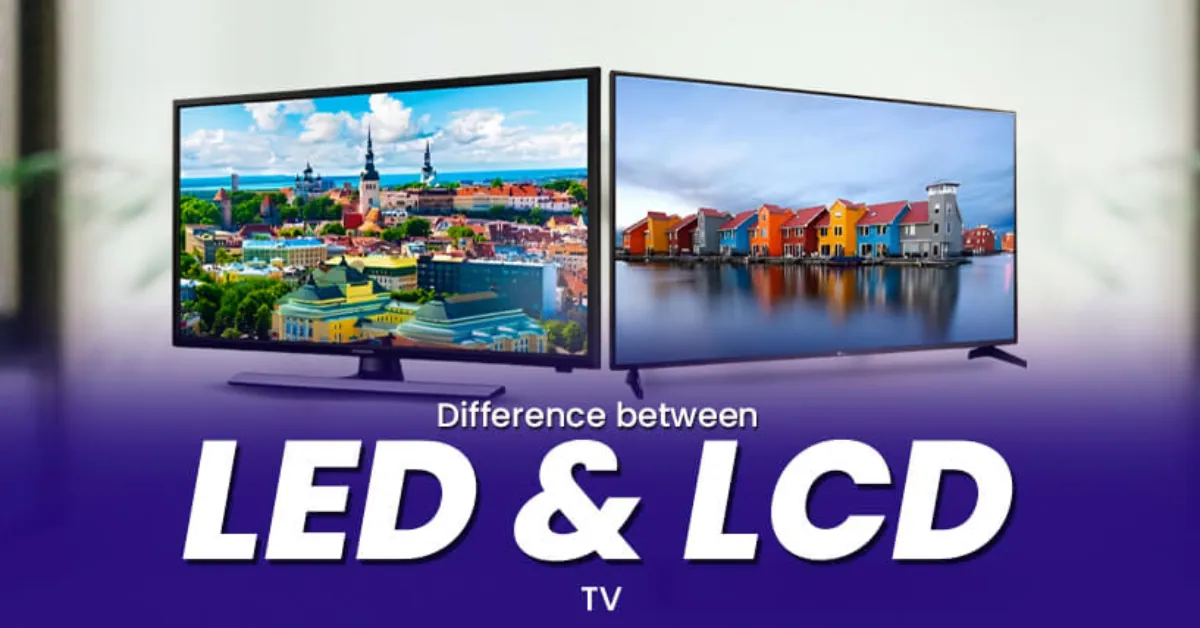
When shopping for a new television, many people come across the terms LCD TV and LED TV and assume they are completely different technologies. In reality, LED TVs are a type of LCD TV, but they use a different backlighting system that offers several advantages.
Understanding the difference between LCD and LED TVs can help you choose the right television for your home, budget, and viewing needs.
What Is an LCD TV?
LCD stands for Liquid Crystal Display. LCD TVs use liquid crystal panels to create images on the screen. Since liquid crystals do not produce their own light, LCD TVs require a backlight positioned behind the screen.
Older LCD TVs typically use CCFL (Cold Cathode Fluorescent Lamp) technology for backlighting.
Features of LCD TVs
- Uses liquid crystal display technology
- Backlit by fluorescent lamps (CCFL)
- Available in various screen sizes
- Generally lower cost
- Good picture quality
LCD TVs were once the most popular television technology before LED TVs became widely available.
What Is an LED TV?
LED stands for Light Emitting Diode. An LED TV is essentially an LCD TV that uses LED lights instead of fluorescent lamps for backlighting.
The LED backlight provides improved brightness, better contrast, and greater energy efficiency compared to traditional LCD televisions.
Features of LED TVs
- Uses LCD display panel
- Backlit with LED lights
- Better brightness levels
- Improved contrast ratio
- Lower power consumption
- Slimmer and lighter design
Today, most modern televisions marketed as LED TVs use this technology.
LCD vs LED TV: Key Differences
Backlighting Technology
LCD TV
Uses CCFL fluorescent tubes for backlighting.
LED TV
Uses LED lights for backlighting.
This is the primary difference between the two technologies.
Picture Quality
LCD TV
Provides decent image quality with good color reproduction.
LED TV
Offers brighter images, deeper blacks, and improved contrast.
LED TVs generally deliver a more vibrant viewing experience.
Energy Consumption
LCD TV
Consumes more electricity because fluorescent lamps require more power.
LED TV
Uses less electricity due to energy-efficient LED lighting.
This can help reduce electricity bills over time.
TV Thickness
LCD TV
Usually thicker because of larger fluorescent backlighting components.
LED TV
Much slimmer and more stylish due to compact LED lighting.
Modern ultra-thin televisions are almost always LED-based.
Heat Generation
LCD TV
Produces more heat during operation.
LED TV
Runs cooler because LEDs generate less heat.
Lower heat generation can contribute to longer component lifespan.
Lifespan
LCD TV
Generally offers good durability but older backlighting systems may degrade over time.
LED TV
LED backlights typically last longer and maintain brightness more effectively.
LCD vs LED TV Comparison Table
| Feature | LCD TV | LED TV |
|---|---|---|
| Backlight Type | CCFL | LED |
| Picture Brightness | Good | Excellent |
| Contrast Ratio | Moderate | Better |
| Energy Efficiency | Lower | Higher |
| Design | Thicker | Slimmer |
| Heat Production | Higher | Lower |
| Lifespan | Good | Better |
| Electricity Usage | More | Less |
Which TV Has Better Picture Quality?
In most situations, LED TVs provide better picture quality than traditional LCD TVs.
Advantages include:
- Higher brightness
- Better contrast
- Improved color performance
- More uniform lighting
This makes LED TVs ideal for movies, sports, gaming, and everyday entertainment.
Which TV Saves More Electricity?
LED TVs are more energy efficient than LCD TVs.
Because LED backlights consume less power than fluorescent lamps, LED televisions can significantly reduce energy consumption, especially in larger screen sizes.
Are LED TVs More Expensive?
When LED TVs were first introduced, they were considerably more expensive than LCD TVs. Today, LED technology has become the industry standard, and the price difference is much smaller.
In many cases, LED TVs offer better value because of:
- Better picture quality
- Lower electricity costs
- Longer lifespan
- Modern features
Should You Buy an LCD or LED TV?
For most buyers, an LED TV is the better choice.
Choose an LED TV If You Want:
- Better picture quality
- Lower electricity bills
- Slim modern design
- Improved brightness
- Longer lifespan
Consider an LCD TV If:
- You find a budget-friendly model
- Basic viewing is your primary requirement
- Price is your main concern
However, LED TVs have largely replaced traditional LCD televisions in today’s market.
Modern TV Technologies Beyond LED
Many modern televisions build upon LED technology and offer even better performance.
Popular options include:
- Smart LED TVs
- QLED TVs
- Mini LED TVs
- OLED TVs
- 4K Ultra HD TVs
- Google TV and Android TV models
These technologies provide enhanced picture quality and smart entertainment features.
FAQs
Is LED TV better than LCD TV?
Yes, LED TVs generally offer better picture quality, improved energy efficiency, and a slimmer design.
What is the main difference between LCD and LED TV?
The main difference is the backlight technology. LCD TVs use CCFL lamps, while LED TVs use LED lights.
Which TV consumes less electricity?
LED TVs consume less electricity than traditional LCD TVs.
Do LED TVs last longer than LCD TVs?
Yes, LED backlights typically have a longer lifespan and maintain brightness more effectively.
Are all LED TVs LCD TVs?
Yes, LED TVs are technically LCD TVs that use LED backlighting instead of fluorescent lighting.
Final Thoughts
The main difference between LCD and LED TVs is the backlighting technology. LCD TVs use fluorescent lamps, while LED TVs use energy-efficient LED lights. This allows LED TVs to deliver better brightness, improved contrast, lower power consumption, and a slimmer design.
For most modern households, LED TVs are the preferred choice because they provide better overall performance and value compared to traditional LCD televisions.